Biomedicine, Healing and Modernity in Rural Bangladesh by Md. Faruk Shah
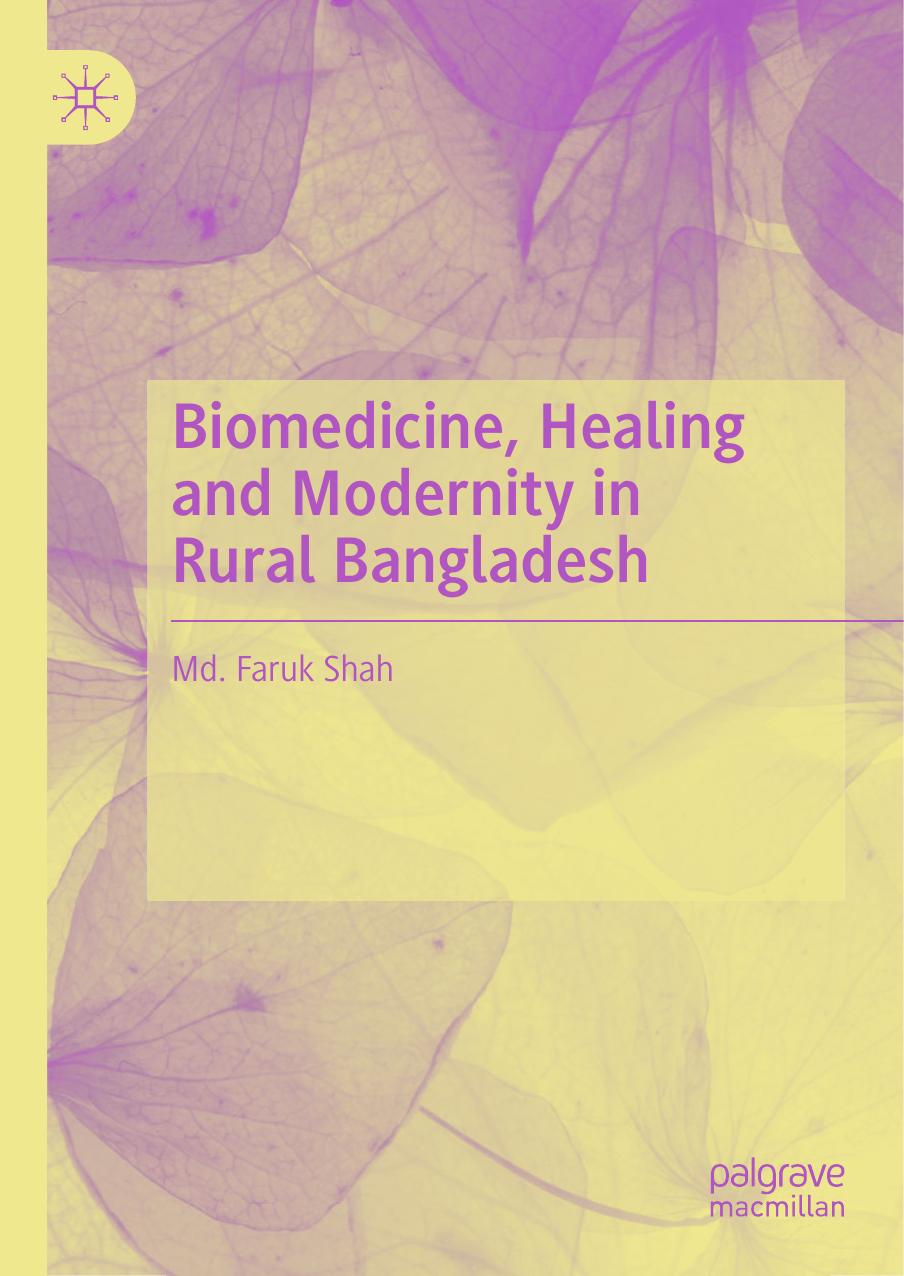
Author:Md. Faruk Shah
Language: eng
Format: epub, pdf
ISBN: 9789813291430
Publisher: Springer Singapore
As is mentioned in Chapter 3, ghush (bribe) and influence are frequent characteristics in the delivery system of health service. It could be observed among some political leaders, officials and wealthy personnel. In some private clinics, ghush is given in order to obtain an early appointment with a doctor. All such irregularities are considered as the cause of sufferings for rural people who cannot afford to pay bribes and who are unable to influence others.
Due to serious illness, one morning, Raton (11) went to see a doctor with her mother and a neighbour. Raton had visited the doctor earlier. On arrival, the neighbour hunched that the doctor was a fraud. The doctor’s visiting card indicated that he completed many medical courses abroad. However, such a highly qualified doctor was not supposed to work at a local clinic. They could not trust the person as a physician. Thus, they left the clinic and made an appointment with another doctor. The appointment time was fixed after five hours in another clinic. How would they spend these five hours time? It was not feasible for Raton and his mother to go back home, because it was far away and once returned they would not be able to come back again on the same day because of the distance and extra-travel costs. So they spent the time at a nearby relative’s house and returned to the clinic at 3 p.m. However, the doctor arrived at 4:30 p.m. I asked an attendant why the doctor was late and she replied: “Although patients make appointments in advance, sometimes they do not come in time or fail to appear; therefore the doctor has to wait for the patients. For this reason, he comes late and examines all the patients”. On hearing this, Raton’s mother asked: “why for others fault, we are to sufferer?” Raton and her mother had been waiting for their call by the doctor, but there was no sign of that. The serial of the patients was not even properly followed. Some patients complained, but the receptionist was reluctant to hear such complaints; rather, she was shouting at them. In the meantime, a patient who was blamed for missing an appointment complained: “Everywhere there is corruption. When did she call me? She is now telling me: ‘You were absent when I called you’”. This time the attendant remained silent.
Another difficulty for rural people is coming in person to make an appointment with a doctor in advance due to the extra cost for transport and the time spent on the journey and back. So, they prefer to have an appointment via telephone; however, the telephone line that is used for providing appointments is either constantly remain engaged or non-responsive. Akram (20), an educated person, was suffering from chest pain. He had called many times to make an appointment with a private doctor, but had to wait for three hours for someone to answer his call. Fortunately, finally, he was able to get an appointment over telephone, but his serial was after 52 other patients.
Download
Biomedicine, Healing and Modernity in Rural Bangladesh by Md. Faruk Shah.pdf
This site does not store any files on its server. We only index and link to content provided by other sites. Please contact the content providers to delete copyright contents if any and email us, we'll remove relevant links or contents immediately.
| Anthropology | Archaeology |
| Philosophy | Politics & Government |
| Social Sciences | Sociology |
| Women's Studies |
Born to Run: by Christopher McDougall(7127)
The Leavers by Lisa Ko(6948)
iGen by Jean M. Twenge(5415)
Sapiens by Yuval Noah Harari(5370)
Spare by Prince Harry The Duke of Sussex(5196)
The Kite Runner by Khaled Hosseini(5179)
Machine Learning at Scale with H2O by Gregory Keys | David Whiting(4313)
Bullshit Jobs by David Graeber(4190)
Never by Ken Follett(3956)
Goodbye Paradise(3810)
Livewired by David Eagleman(3772)
Fairy Tale by Stephen King(3396)
A Dictionary of Sociology by Unknown(3085)
Harry Potter 4 - Harry Potter and The Goblet of Fire by J.K.Rowling(3073)
The Social Psychology of Inequality by Unknown(3031)
The Club by A.L. Brooks(2925)
Will by Will Smith(2919)
0041152001443424520 .pdf by Unknown(2845)
People of the Earth: An Introduction to World Prehistory by Dr. Brian Fagan & Nadia Durrani(2736)
